

South Dakota’s Economic Success: A Legacy of Smart Incentives and Pro-Business Leadership

South Dakota achieved statehood in 1889. From that moment forward, our leaders faced a clear choice: build an economy grounded in low taxes, limited government, personal responsibility, and voluntary cooperation between citizens and the state, or descend into the chaos of high taxation and bureaucratic overreach that has crippled so many other places. They chose the former. The result is one of the strongest, most resilient economies in America. This is not luck. It is the predictable consequence of aligning policy with reality.
In 1978 the Legislature authorized Tax Increment Financing districts. This self-funding mechanism allows cities and counties to redevelop underused land and attract private investment without raising taxes on existing property owners. It has remained a consistent and effective local partner in economic development ever since.
Building directly on that foundation, Governor Bill Janklow revolutionized South Dakota’s banking laws in 1980. By removing interest-rate caps and passing the landmark “Citibank bill,” Janklow invited the credit-card industry to Sioux Falls. That bold move diversified our economy and created thousands of high-wage jobs that continue to power the state today. Reflecting on the success years later, Governor Janklow himself said it was “one of the best things we ever did,” noting that the policy generated hundreds of millions of dollars in bank franchise taxes and unclaimed property receipts while putting thousands of South Dakotans to work in high-paying white-collar jobs. This is what happens when leaders have the courage to remove barriers and let competence flourish.
In 1987 Governor George S. Mickelson launched the modern era of structured economic development. Through Executive Reorganization Order 1, he formally created the Governor’s Office of Economic Development (GOED) by merging earlier development divisions into a single, focused agency. GOED’s mission to retain, expand, and attract businesses while coordinating statewide efforts remains the central hub for economic policy today.
That same year, Governor Mickelson created two of our most successful and enduring programs: the REDI Fund (Revolving Economic Development and Initiative Fund) and the Future Fund (officially the Employer’s Investment in South Dakota’s Future Fund).
The REDI Fund, seeded with $40 million raised through a temporary one-cent increase in the state sales tax, provides low-interest revolving loans to businesses that create primary jobs, especially in manufacturing and value-added agriculture. The first REDI loans were issued in September 1987. Still operating today, the fund has supported thousands of projects, leveraging private investment and helping generate tens of thousands of quality jobs across the state.
The Future Fund, funded through a dedicated employer fee tied to unemployment insurance, supports workforce training, technical assistance, research partnerships, entrepreneurship, and quick-response economic initiatives. It has enabled colleges, universities, and industry to work together on skills development and innovation. This is a critical tool that continues to strengthen South Dakota’s workforce and keep businesses competitive.
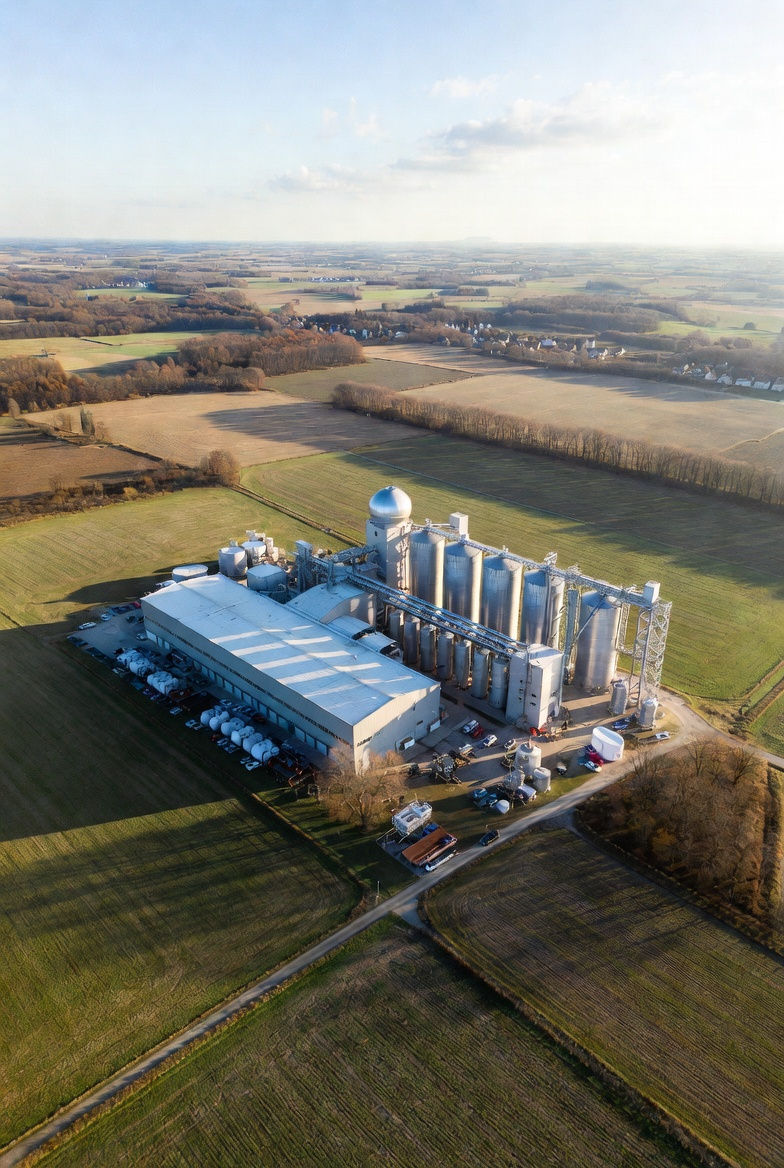
These programs have delivered tangible, real-world impact. SFC Global Supply Chain (Schwan’s) received a $15 million REDI loan to build a major food-production facility projected to create 650 new jobs and attract $550 to $750 million in total investment. Silencer Central secured a $5 million REDI loan for its new 63,000-square-foot automated manufacturing plant in Sioux Falls. DeGeest Corporation in Tea used a $3.5 million REDI loan to expand its operations, while Dakota Automation in Watertown received nearly $2 million to construct a state-of-the-art facility for industrial automation equipment. The Future Fund has supported innovation projects such as a $900,000 grant to Dakota BioWorx for bioprocessing research at the SDSU Research Park. South Dakota Soybean Processors’ High Plains Processing facility near Mitchell further demonstrates this success: the $500+ million multi-seed crushing plant leveraged $6.7 million in GOED support, $21 million in local Tax Increment Financing (TIF) from Davison County, and state-backed railroad infrastructure assistance to create approximately 85 new jobs and dramatically expand value-added agriculture in the region.
District 4 and surrounding area: These successes extend across some of South Dakota’s largest manufacturers and processors. Terex in Watertown secured a record $10 million REDI Fund loan (plus a $2.48 million reinvestment payment) to consolidate operations and protect hundreds of jobs, supported by a dedicated Tax Increment Financing district approved by the City of Watertown. Agropur at Lake Norden has received multiple reinvestment payments, including $835,953 for a $65 million modernization project, and utilized Hamlin County Tax Increment Financing for its earlier major expansion. Valley Queen Cheese in Milbank was awarded $3.9 million through the Reinvestment Payment Program for a major expansion that created 130 new jobs and benefited from a City of Milbank Tax Increment Financing district (Tax Increment District Number Four) along with significant electrical infrastructure upgrades through Otter Tail Power, including new 115 kV transmission lines and a substation to support the project. Solventum (the current iteration of 3M in Brookings) received a $15 million Reinvestment Payment Program award for its $220 million expansion, along with $3.5 million in local TIF financing from the City of Brookings.
Governor Walter Dale Miller provided steady leadership and continuity, ensuring these new tools stayed strong and effective.
When Governor Janklow returned for his second term, he doubled down on pro-business policies that kept South Dakota competitive on the national stage.
Governor Mike Rounds advanced research, technology, ethanol production, and value-added agriculture incentives, further strengthening key sectors of our economy.
Governor Dennis Daugaard elevated the Governor’s Office of Economic Development to full cabinet-level status in 2011, sharpening its focus on infrastructure improvements and workforce training programs while maintaining the core incentives created under Mickelson.
Governor Kristi Noem delivered record numbers of economic-development wins and maintained an open for business environment that attracted new investment across multiple industries.
Today, Governor Larry Rhoden is carrying the torch forward with targeted investments in emerging growth sectors such as national security and defense manufacturing.
Throughout every one of these administrations from statehood to the present, our local governments have skillfully used TIF districts, authorized since 1978, to turn vision into thriving projects that expand the tax base and benefit every South Dakotan.
This consistent, smart approach (low taxes paired with dozens of targeted sales tax exemptions delivering nearly $1.4 billion in annual relief, strategic performance-based incentives, the unified coordination of GOED, the proven power of the REDI Fund and Future Fund, and local TIF tools) has built one of the strongest economies in America. South Dakota proves that when government partners wisely with business, opportunity grows for everyone.
Federal officials have repeatedly praised South Dakota’s low-tax model as a national example of pro-growth policy.
U.S. Senator John Thune has been one of its strongest advocates. In his 2012 op-ed “South Dakota is Model for Economic Development,” he wrote that “with no personal income tax and no corporate state income tax, South Dakota continues to attract businesses to locate and develop in our state.” He praised our fiscally responsible state and local governments for keeping spending in check and creating an environment where businesses thrive. In 2006, Senator Thune highlighted a Tax Foundation study ranking South Dakota’s business-friendly tax climate second-best in the nation, stating, “This is great news for South Dakota but not a surprise to the thousands of business owners across the state who take advantage of the business-friendly climate that has been created over the years.”
Senator Mike Rounds has echoed this view, stating that “tax cuts work for South Dakotans” and emphasizing that pro-growth policies at the state and federal levels give businesses the certainty they need to invest, expand, and create jobs.
U.S. Representative (and later Governor) Kristi Noem proudly carried South Dakota’s low-tax philosophy to Washington, declaring she was “proud to bring some South Dakota, low-tax commonsense” to federal tax reform efforts that benefited small businesses, farmers, and families back home.
U.S. Rep. Dusty Johnson has also celebrated this approach, stating in 2024: “We have people who know how to work, we’ve got a low tax environment, we have a reasonable regulatory environment, we don’t just jerk people around. In South Dakota businesses succeeding is something that we celebrate not something that we punish. Word has gotten out across the business community and that’s why we score so highly on those report cards.” Johnson has taken this vision further with his “Data Centers Done Right” initiative, which proposes targeted tax rebates or exemptions on electronic equipment for data centers that meet strict performance standards. As Johnson explains, “In South Dakota, we don’t want growth for growth’s sake. We want growth with purpose.”
As your State Representative for District 4, I will continue the charge of our past governors. By building upon the obvious strengths of these proven tax policies (no personal or corporate income tax, targeted sales-tax exemptions, performance-based incentives, and local TIF tools) we can deliver overwhelmingly positive impacts across our state. Families keep more of their hard-earned money for homes, education, and opportunity. Towns and rural communities gain new jobs, thriving businesses, and upgraded infrastructure that revitalize main streets and downtowns. And our statewide economy grows faster, creates higher-wage employment, attracts new investment, and secures a brighter, more prosperous future for every South Dakotan, all while preserving the low-tax, pro-business environment that has made us a national leader for generations.


Comments